We build apps and AI systems for businesses.
For businesses whose work runs through many tools and many people: one app your team works in every day, with AI assistants that do real work inside it and a person approving anything that matters. We design it around how your business runs, build it, and support it after launch on terms agreed in writing.
- Filed new documents into client folders
- Drafted a reply to a client question
- Checked the draft and sent it for approval
- Approved a supplier payment with Face ID
Send the reply to the client
What we build
One system, shaped around how your business already works.
An app for your team and your clients
A web or iPhone app built around your work: clients, documents, tasks, messages and approvals in one place. It can connect to the services you already use, where those services allow it.
AI assistants with clear limits
People on your team can have an assistant that does real work through a fixed set of tools. It can only use the tools and the information its role allows.
A clear view for the owner
See what is done, what is late and what is waiting on someone. Each approval, the decision on it and each step the rules stopped, by a person or an assistant, is recorded in one log you can read.
How it stays safe
The AI prepares the work. A person decides.
These are the rules we build to. Our own company runs on them today.
Approvals and stopped steps are recorded
Each request for a person's approval, the decision on it, and each step the rules stopped go into a log, with when it happened and who acted, a person or an assistant.
Important steps wait for a person
You choose which steps need a person, such as payments, messages to clients or changes to records. An assistant prepares them, and each one waits until a person approves it, at the computer or on their phone, where approving asks for Face ID.
You choose the AI company that reads your files
Your files stay in accounts your business owns. The AI work runs through your own account with the AI company you choose, such as Anthropic or OpenAI, under that company's business terms. An assistant sees only what a task needs, and only when the system allows it.
Assistants work within written rules
What an assistant may do is written down as rules. The system checks them before each action and blocks the actions they rule out. In our own company today, every approval goes to the owner.
How we work with you
Clear steps, agreed in writing.
A conversation
We sign your confidentiality agreement first. Then we ask how your business runs today and where the time goes.
A written proposal
Our quote, in writing: what we will do, in what order, by when and for how much. Nothing starts until you agree to it. A build after a blueprint gets its own proposal.
A blueprint, if you want one
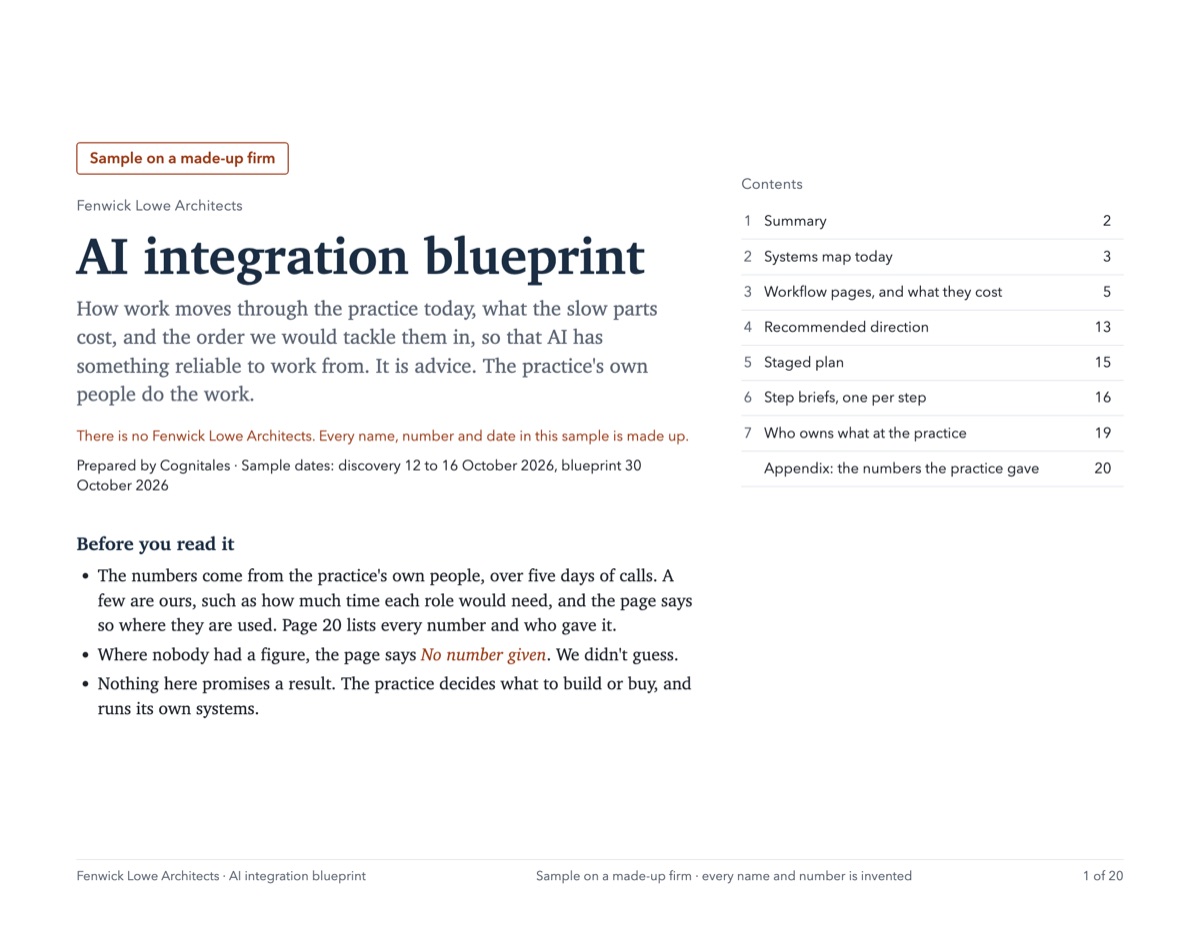
About 15 hours of video calls with your team over one week, then a written plan: what your current way of working costs, and what to change first. Your team acts on it.
About the blueprintBuilt in stages
If we build it, each stage ends with working software your team can use. What you learn from it shapes the next stage.
Running it with you
After launch, we can look after the system under a support agreement: a separate written agreement that says what we look after and for how long. While it runs, we install updates and security fixes and make the changes we agree on with you.
A plan for AI in your firm, in your own numbers.
What the slow parts of your week cost, counted from your team’s own figures, and what to change first. It is advice; the decisions stay with you.
How the blueprint works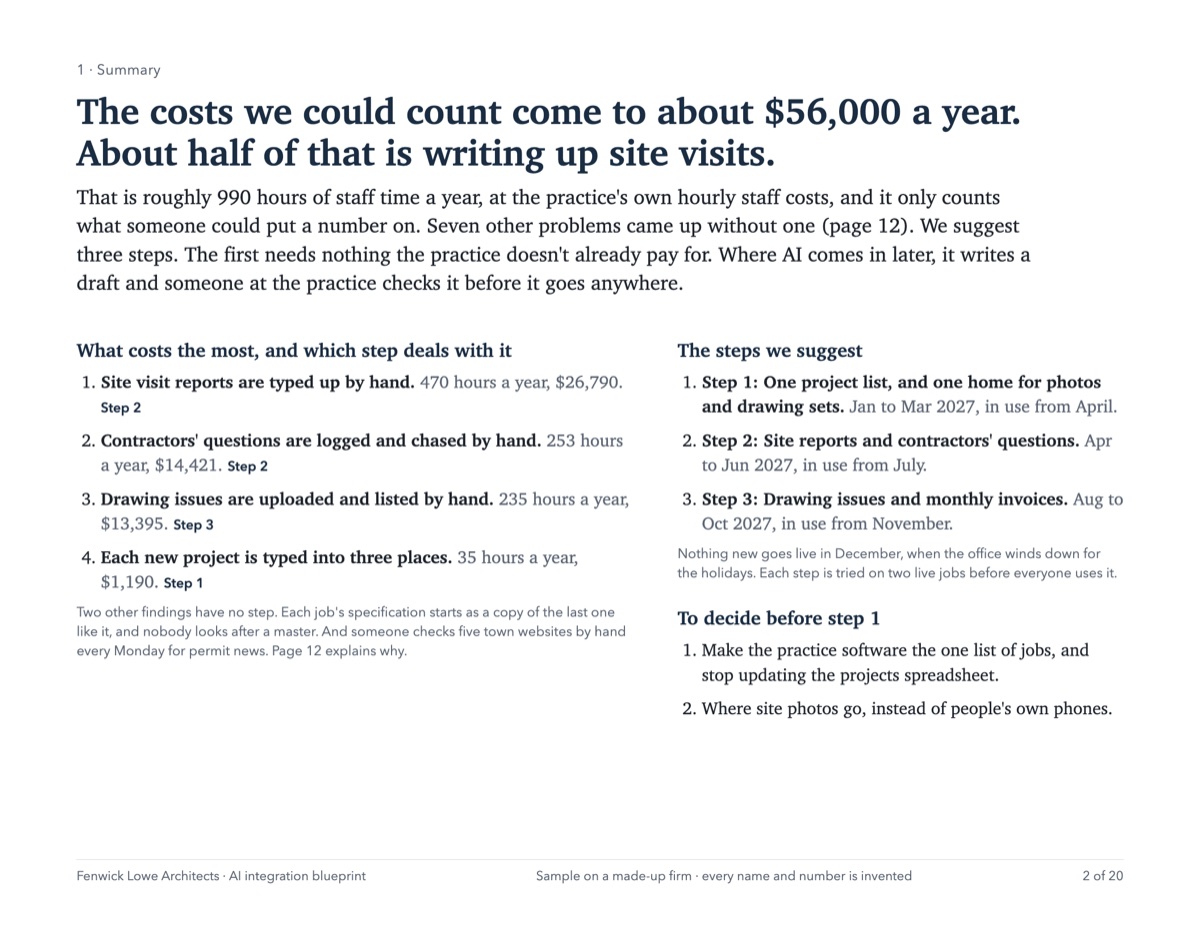
Our own apps
We make our own apps too.
Built on the platform our own company runs on, and released only after a person approves the release.
Poeia
Helps writers find the right word by the feeling it carries, not only by what it means.
Tell us how your business works.
Where the work gets stuck, which tools you rely on, what you would like to change. We will reply by email to set up a first conversation.
Available to license
The permission software behind our own AI agents is available to license. With it, they work within written limits, and nothing is released until a person approves it. Approving on a phone asks for Face ID. About licensing