AI integration
Know where AI fits in your firm before you buy or build anything.
We spend about a week with your team learning how work moves through your systems. About two weeks later you get a written blueprint: what the slow parts cost in your own numbers, and what to change first, starting with the systems you already pay for.
What you receive
A written blueprint, 15 to 20 pages.
Below are four pages from a sample we wrote for a made-up architecture practice, Fenwick Lowe Architects. Every name and number in it is invented. Yours would carry your systems and your team's numbers.
- Summary
- Systems map today
- Workflow pages, and what they cost
- Recommended direction
- Staged plan
- Step briefs, one per step
- Who on your side owns each step
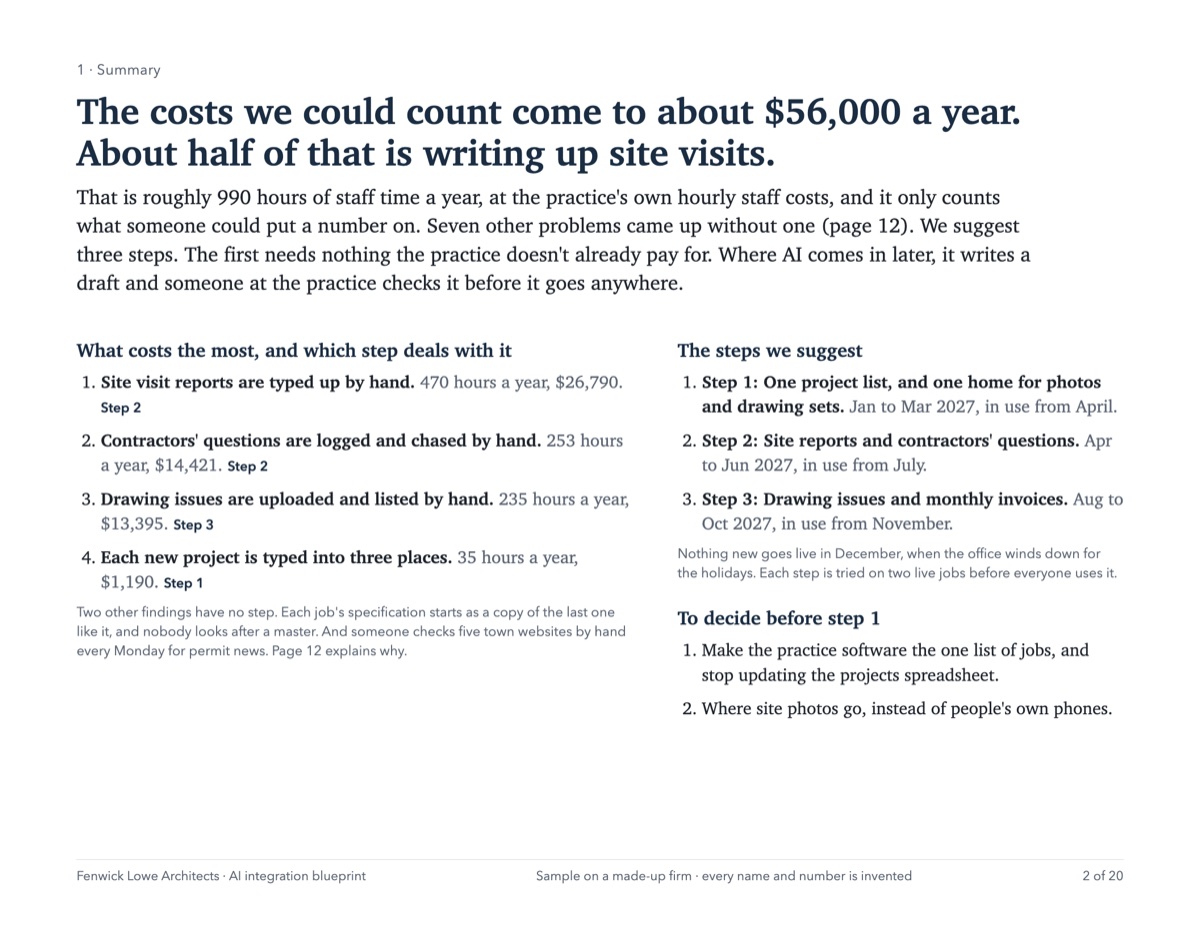
The summaryWhat costs the most, and the steps that address it. 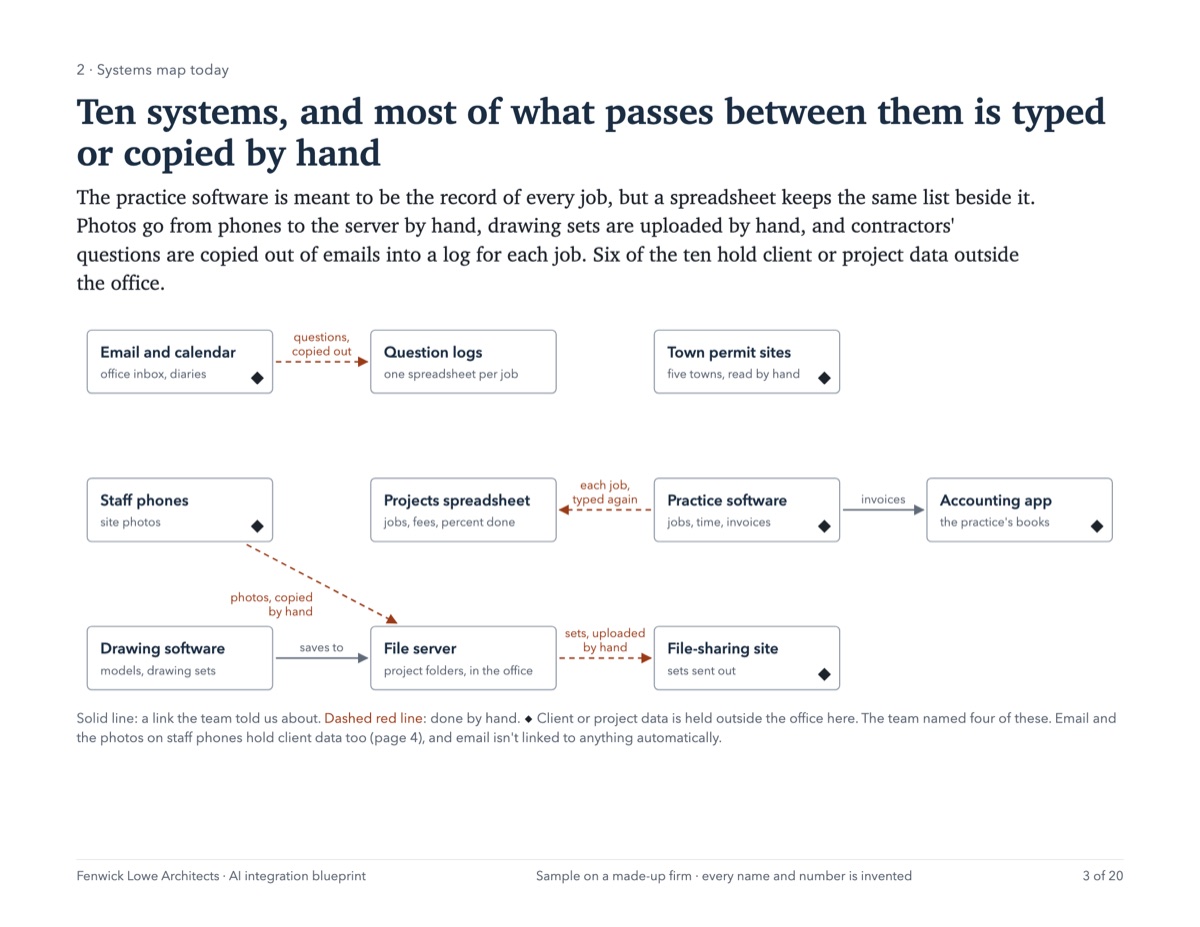
The practice's systems todayWhat each one holds, and where work is typed twice or moved by hand. 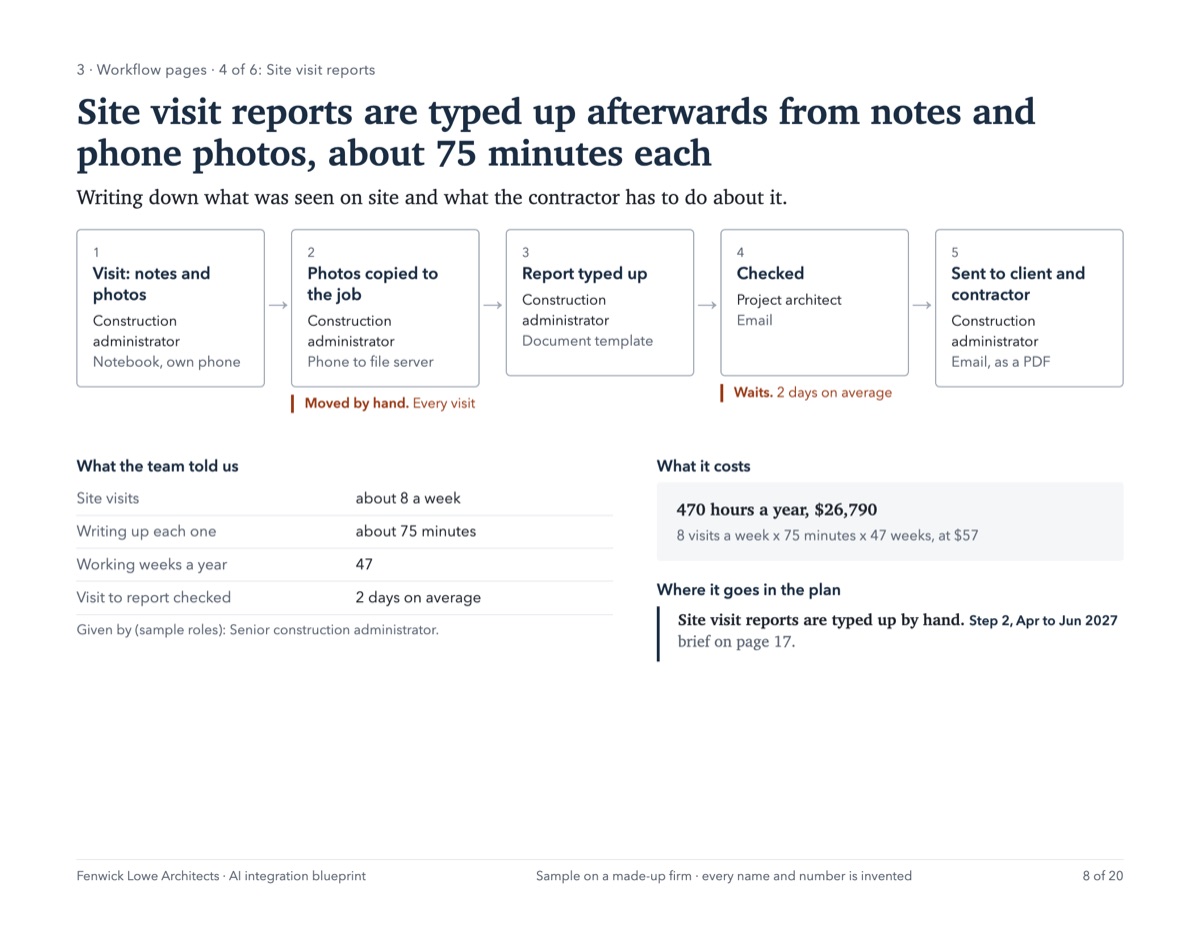
One page per workflowCosted with the numbers your team gives, and how each cost is counted. 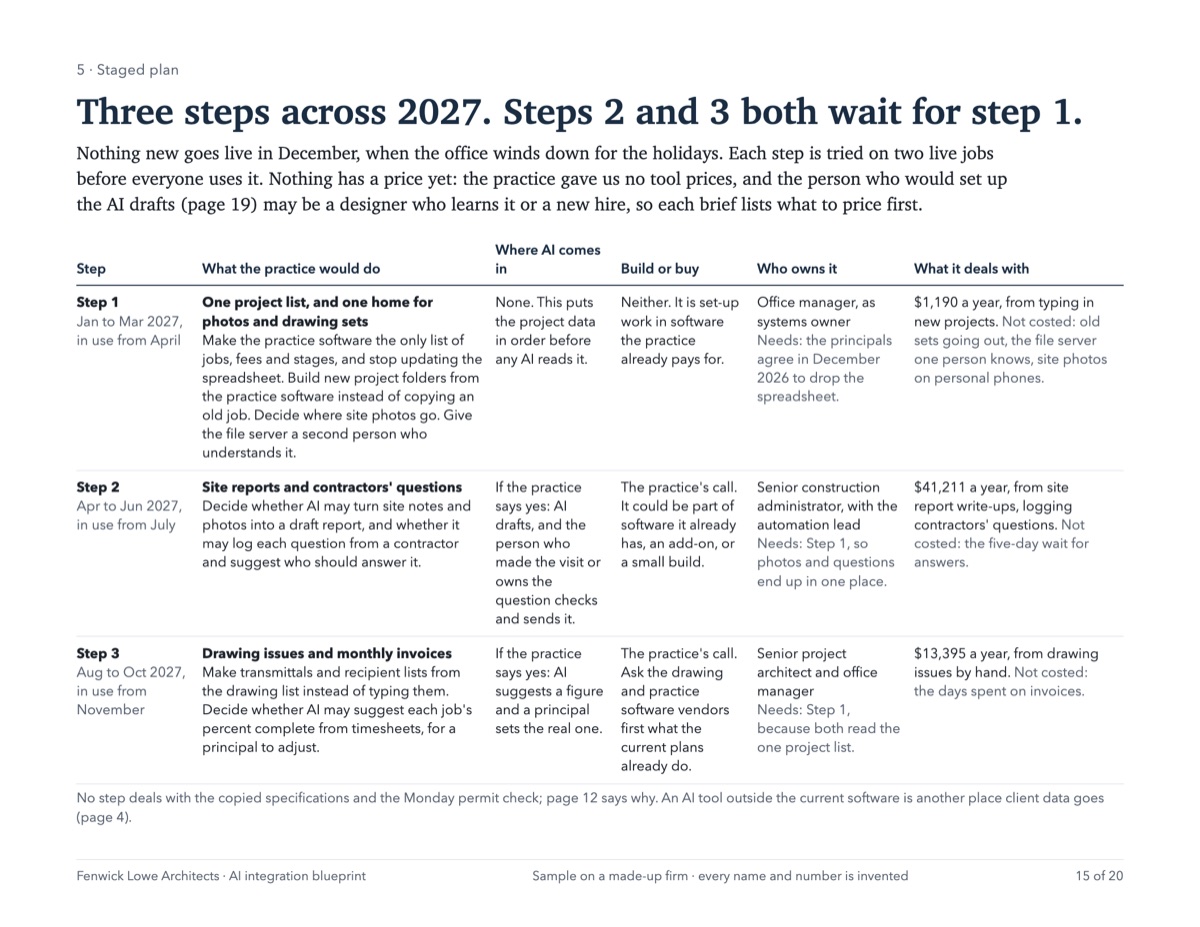
A staged planWhere AI comes in at each step, and the decisions that are yours to make.
How it runs
A week with your team, then a written plan.
After the first call we send a written quote. It depends on how many people and systems are involved, so we do not put a price here.
Conversations with your team
About 15 hours of video calls in total, not per person, spread over five working days, with the people who do the work: which systems they use, where work is typed twice, where it waits. Nothing needs preparing before the calls; your team gives us its figures while we talk. We agree the dates, and who joins each call, with you beforehand, outside your busiest weeks.
Counted from your team's figures
Every cost is counted from figures your team gives us, such as how often a task happens and roughly how long it takes. Where we have to assume something, the blueprint labels it as ours; where there is no figure at all, it says so. We do not need your clients' files for it.
A first look at the end of the week
One page: your systems on a map, and the early findings.
The blueprint, presented to your team
On a video call, about two weeks after the first look, on a date set in the proposal. It is advice, not a promise of a solution. Where a step needs something built or bought, it says what to price before deciding, and leaves the choice to you.
Afterwards your team acts on it. If you would like help, we can stay on as advisers for a set number of hours a month, three months at a time: we meet with your team, answer their questions in writing and review their plans. Advising does not include building anything or working in your systems; if you want something built, that is a separate proposal (step 04 below).
Who it is for
Firms that want a plan before a tool.
- You run a professional firm, such as architects, lawyers, accountants or advisers, and its work runs through several systems that do not talk to each other.
- Work is typed in twice, or waits on someone moving it by hand.
- You want AI to take on routine work, and to know first what it would touch and what it would save.
- You would rather start from a plan than buy another tool.
How we work with you
Clear steps, agreed in writing.
The blueprint is step 03, and it can be the whole engagement: you can stop after it and act on it with your own team.
A conversation
We sign your confidentiality agreement first. Then we ask how your business runs today and where the time goes.
A written proposal
Our quote, in writing: what we will do, in what order, by when and for how much. Nothing starts until you agree to it. A build after a blueprint gets its own proposal.
A blueprint, if you want one (this page)
About 15 hours of video calls with your team over one week, then a written plan: what your current way of working costs, and what to change first. Your team acts on it.
Built in stages
If we build it, each stage ends with working software your team can use. What you learn from it shapes the next stage.
Running it with you
After launch, we can look after the system under a support agreement: a separate written agreement that says what we look after and for how long. While it runs, we install updates and security fixes and make the changes we agree on with you.
Tell us how your firm works.
Tell us where work gets stuck and what you would hand to AI if you could. We reply by email to set up a first conversation.
Available to license
The software that keeps our own AI agents in check.
AI agents write and test much of our own code, and every step they take goes through this software first. It checks the step against written rules. Risky steps, such as changing live data, spending money or publishing, are stopped and go to a person to decide. Nothing goes live on the App Store or the web until a person approves it; approving on a phone asks for Face ID. Every change is recorded.
It is available to license. If your team or your software supplier runs AI agents, tell us how they are set up and we will say plainly what it would take.
Ask about licensing